Open Science
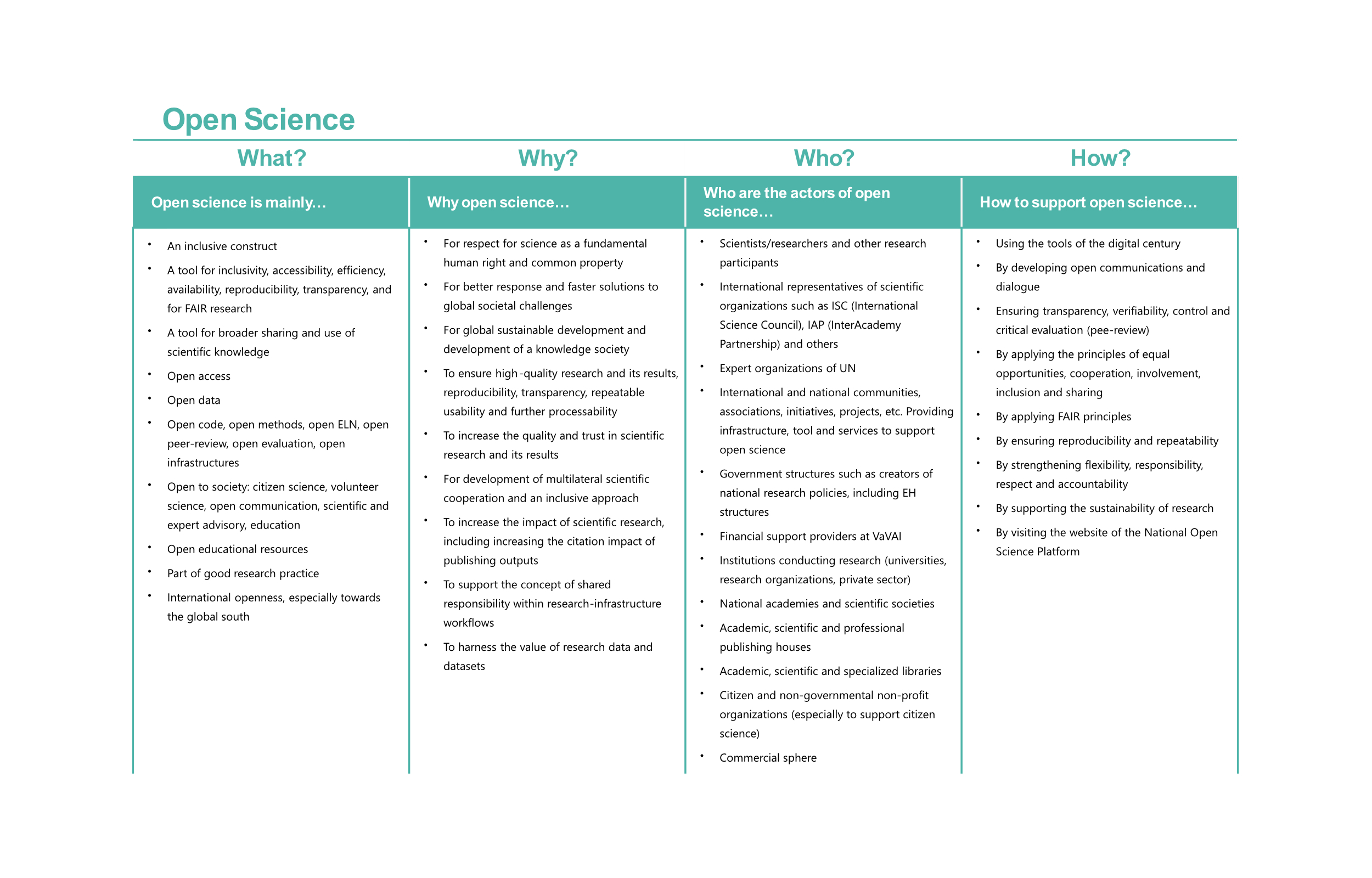
Open science is a research approach focused on transparency, accessibility and collaboration. It aims to make scientific results accessible not only to experts but also to the wider public, thereby supporting innovation, trust and the effective use of knowledge.
„Open as possible,
closed as necessary“
This principle emphasizes maximum openness with responsible restrictions maximum openness with responsible restrictions
Open as possible: Share research outputs – such as publications, data and methodologies – as openly and freely as possible. This promotes transparency, collaboration and innovation.
Closed as necessary: Only restrict access when there are legitimate reasons, such as:
- Privacy protection (personal or sensitive data, GDPR compliance)
- National security (data that could be misused)
- Intellectual property (patents, licenses)
- Ethical considerations (research on humans)
The goal is to find a balance: make as much information as possible available while protecting what needs to remain confidential.
Main Open Science Principles
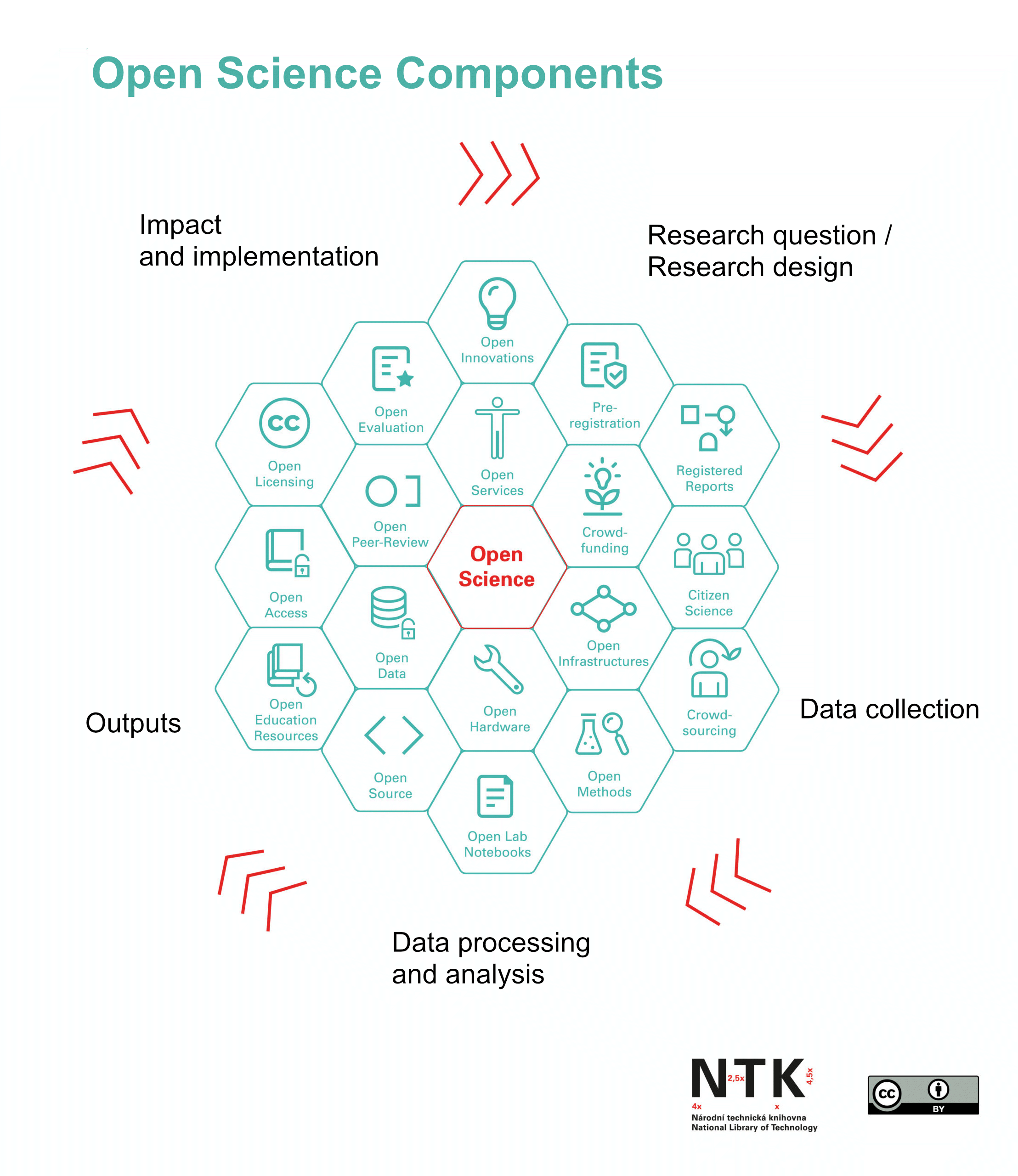
Open science encompasses the pillars of Open Access, Open Data, Open Source, Open Hardware, Open Evaluation, Open Notebook, Open Science Infrastructures, Open Labs, Open Educational Resources, Citizen Science, Crowdfunding, and Open Innovation. Below, we list those that are key from the perspective of the BC.
PLEASE NOTE: Compliance with certain principles is strictly required of grant recipients as part of the so-called mandatory and optional open science procedures! If you are unsure which open science procedures you must follow in your project, please contact the project department or the Open Science Manager for assistance.

Open Access
Scientific articles are freely available online without barriers, subscriptions, or time embargoes.

Open Data
Data is stored and openly shared in repositories with rich metadata, without restrictions (exceptions above).

Open Peer-Review
The open peer review process represents a transparent model for publishing and evaluating scientific publications.

Open Methodology
Sharing detailed descriptions of methodologies, protocols, lab notebooks, and software code.

Citizen Science
This involves collaboration between RO and other stakeholders, particularly through public engagement.
Why does it matter?
Open science allows scientific results to be verified, which enhances the credibility of research and reduces the potential for data manipulation. Sharing data and publications (Open Access) reduces the number of duplicate studies. Researchers can build on existing data, which accelerates scientific progress. Last but not least, all of this saves money and time.
If you'd like to learn more about our principles and goals:

Strengthens trust

Accelerates innovation

Saves
money