Creative Commons Licenses
Creative Commons (CC) licenses are an internationally used system of public licenses that allow authors to specify in a simple and legally understandable way how others can use their work. They allow for pre-defined rights to share, modify and reuse content without the author having to enter into individual license agreements. CC licenses cover a wide range of creative outputs - texts, images, multimedia, educational materials, data or scientific publications.
„Copyright sometimes protects ideas so fiercely that it prevents them from even living.„
The main goal of CC licenses is to facilitate the legal sharing and reuse of content. Users know in advance what they are allowed to do (e.g. copy, modify, use commercially) and what they must avoid (e.g. derive or distribute commercially without the author's consent). By providing clear rules, CC licenses increase the availability of knowledge, reduce legal uncertainty, and accelerate scientific communication, education, and innovation.
Licenses and the requirements of funders
Public licenses, including CC, complement copyright – they do not weaken it, they only specify how the author shares his work. They are essential for open science, because funding providers (e.g. the European Commission, Czech Science Foundation, TA CR, MEYS) increasingly require not only open access to publications, but also open or at least clearly licensed research data. CC licenses have therefore become a standard in Research Data Managementu, because they allow transparently defining the conditions for the use of data by third parties. A poorly chosen license in conflict with the terms of the project also leads to a reduction in funding!
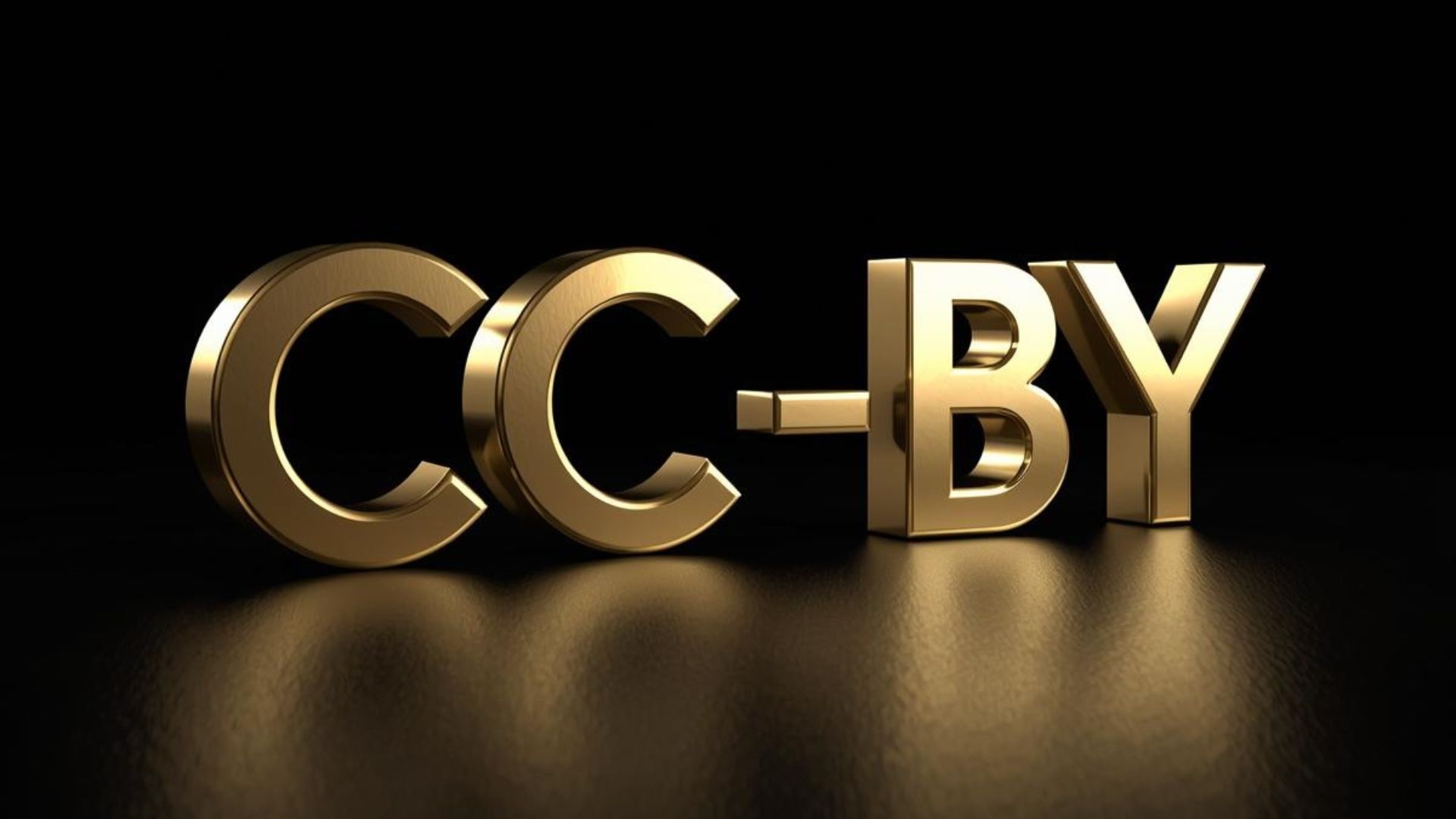
Give attribution
What enables:
✓ This license enables reusers to distribute, remix, adapt, and build upon the material in any medium or format, so long as attribution is given to the creator.
✓ The license allows for commercial use.
Suitable for: open access articles, open data, publicly funded outputs.
Not suitable for: data with ethical, legal or commercial restrictions.
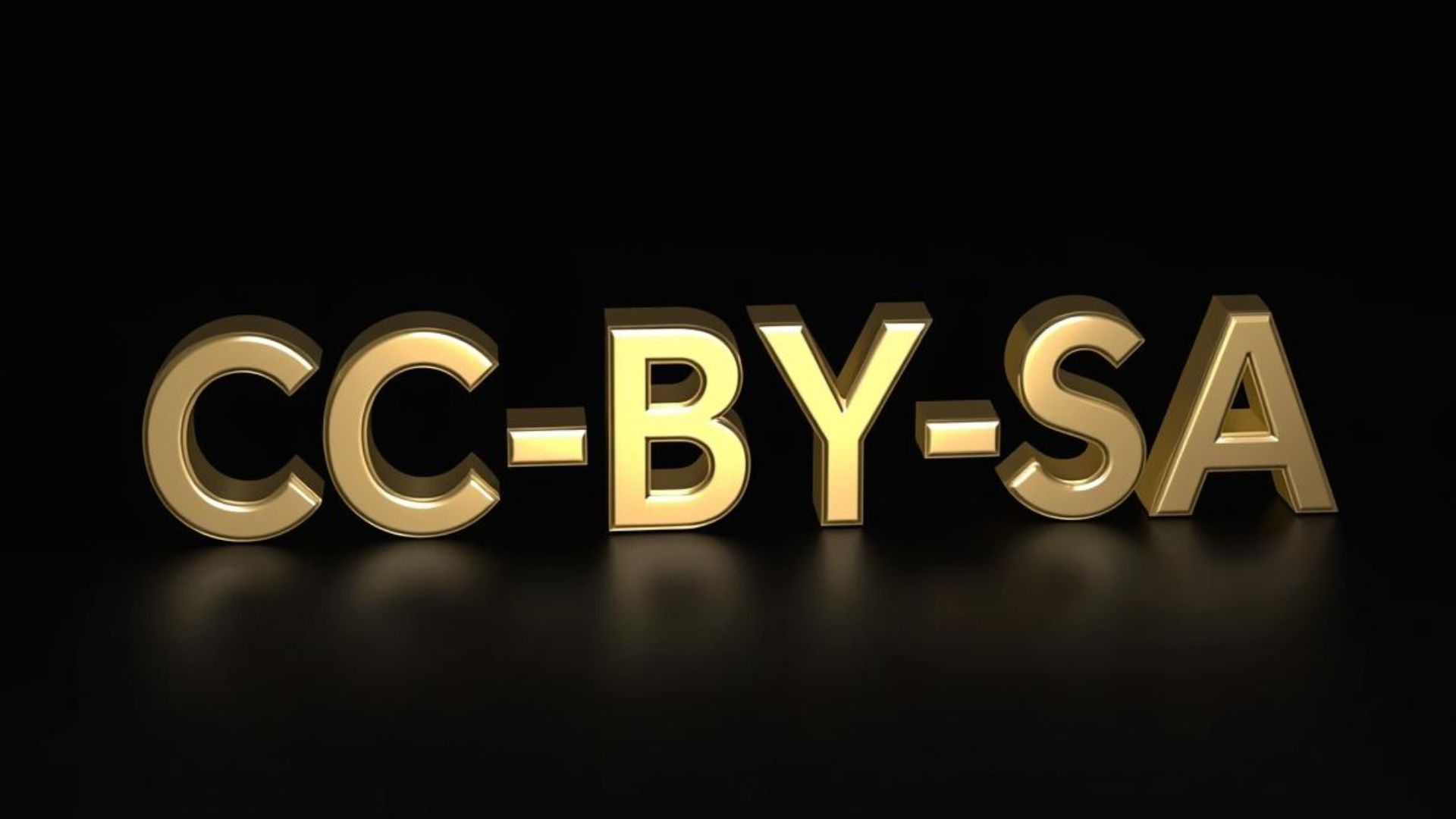
Give attribution
and share alike
What enables:
✓ This license enables reusers to distribute, remix, adapt, and build upon the material in any medium or format, so long as attribution is given to the creator. The license allows for commercial use.
✓ If you remix, adapt, or build upon the material, you must license the modified material under identical terms.
Suitable for: educational materials, software documentation, content where it is important to spread openness further.
Not suitable for: publications or data where a share-alike obligation may be a deterrent.
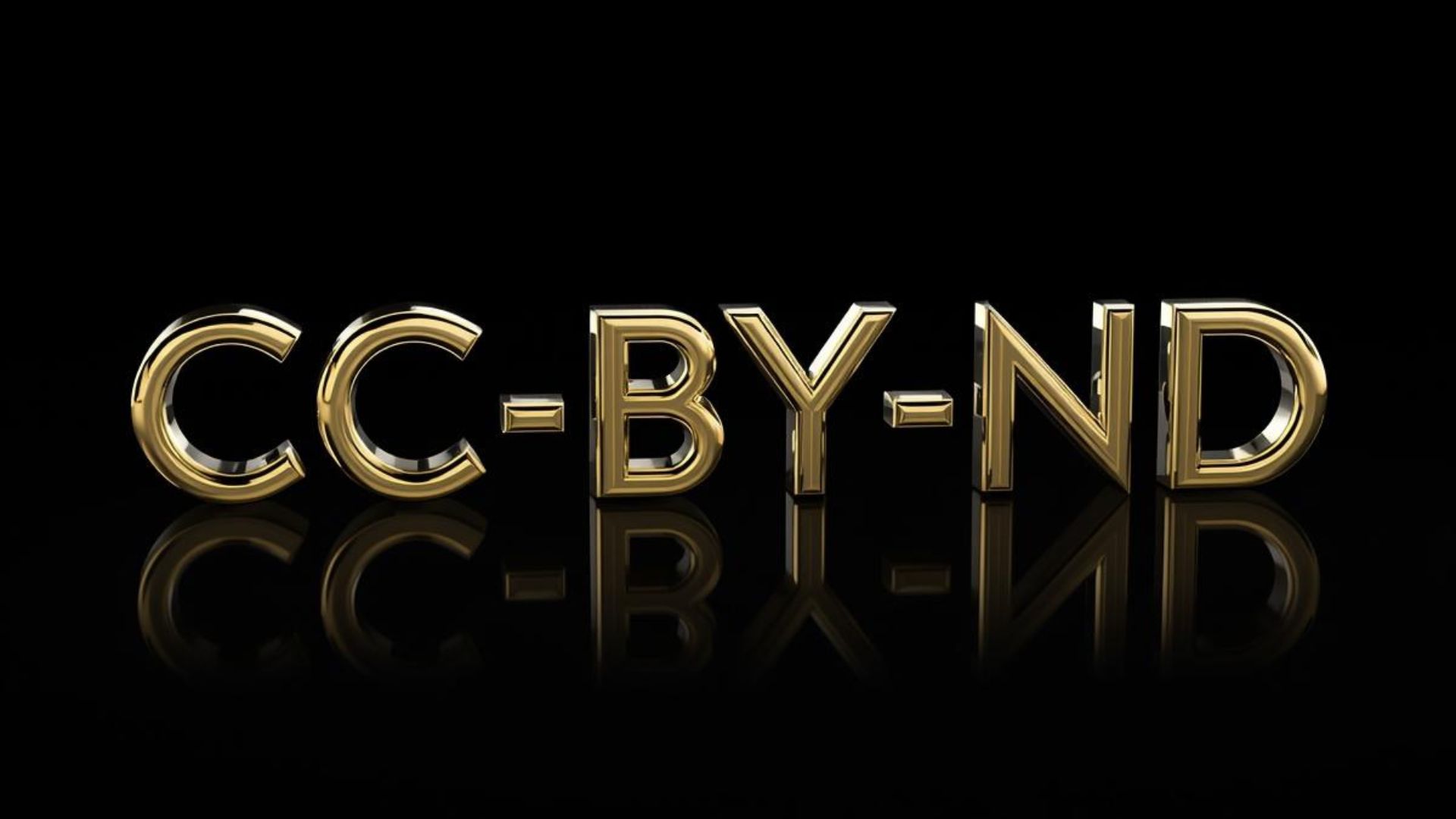
Give attribution
no derivatives
What enables:
✓ This license enables reusers to copy and distribute the material in any medium or format in unadapted form only, and only so long as attribution is given to the creator.
✓ The license allows for commercial use.
Suitable for: official documents, images, graphics that the author does not want to be altered.
Not suitable for: scientific data (editing and validation are a normal part of the work).
Give attribution
& noncommercial use only
What enables:
✓ This license enables reusers to distribute, remix, adapt, and build upon the material in any medium or format for noncommercial purposes only, and only so long as attribution is given to the creator.
Suitable for: educational materials, blogs, photographs, monographs.
Not suitable for: grant-funded scientific articles.
Give attribution, noncommercial use only and share alike
What enables:
✓ This license enables reusers to distribute, remix, adapt, and build upon the material in any medium or format for noncommercial purposes only, and only so long as attribution is given to the creator.
✓ If you remix, adapt, or build upon the material, you must license the modified material under identical terms.
Suitable for: community learning materials, open-source education.
Not suitable for: articles in most scientific journals, open data.
Give attribution, noncommercial use only and no derivatives
What enables:
✓ This license enables reusers to copy and distribute the material in any medium or format in unadapted form only, for noncommercial purposes only, and only so long as attribution is given to the creator.
Suitable for: copyrighted photographs, illustrations, works of art.
Not suitable for: research data and scientific publications – violates the requirements of most open-access policies.
How to choose the right license?

Research Articles
Suitable license:
CC-BY: Mandatory for most grant providers for both indicator recognition and Article Publishing Charge recognition.
CC-BY-SA: If the grant terms allow it. But a more restrictive license reduces citations!
Inappropriate:
CC-BY-NC; CC-BY-NC-ND: Rrestrictive licenses are suitable for monographs.

Research Data
Suitable license:
CC0: If the goal is maximum openness (also suitable for metadata).
CC-BY: If citation is required (mandatory for most grant providers for the recognition of the related article as an indicator).
Inappropriate:
CC-BY-NC: Complicates commercial use of data, e.g. industrial collaboration.
CC-BY-ND: Does not allow data transformation for scientific purposes.
You are not granting the publisher a CC-BY or CC-BY-NC license!
Many authors believe that by choosing a CC-BY or CC-BY-NC license, they determine the conditions under which their work will be used by the publisher. However, this is a fundamental mistake. CC licenses never regulate the author's relationship with the publisher. vydavatel. To je však zásadní omyl. CC licence nikdy neupravují vztah autora k vydavateli. The publisher is governed exclusively by the publishing agreement (license agreement) that the author signs. CC licenses apply to all other usersto whom the author grants a public license through the publisher. The publisher is only a "ferryman" that publishes this license in the article!
Impact on the publishing process
A publication contract typically regulates what the publisher is allowed to do with the article (print, distribute, publish), whether the author retains copyright, open access conditions, APC fees, permission to store preprints or postprints. Creative Commons licenses, on the other hand, do not determine the rights of the publisher, they set the terms of use for the public, and, no way replace the contractual relationship between the author and the publisher. So, if the author chooses, for example, CC-BY-NC, thinking that this will prohibit the publisher from further commercial use of the article, he is mistaken. The CC license is not used for this at all - it neither prohibits nor allows the publisher to do anything. Everything is determined by the contract that the author signs with the publisher, or rather the publisher's terms and conditions.
Why is CC-BY-NC inappropriate for scientific articles?
Many authors choose the more restrictive CC-BY-NC because they are afraid of "misuse" of their article by commercial entities. However, this step has several negative impacts:
1) It limits further use of the article
The “non-commercial” condition is legally ambiguous. Many institutions (such as large scientific databases) prefer not to use the article so as not to risk violating the license.
→ This reduces the visibility and citation of the author's work!
4) Blocks automated tools and scientific workflow
Text mining, machine learning, data extraction or systematic searches often fall into the "commercial" regime (e.g. if the tool is operated by a commercial company).
→ CC-BY-NC prevents modern ways of using articles!
5) Disadvantages for the authors themselves
- fewer citations (frequent and proven effect of restrictive licenses),
- complications when including the article in repositories,
- the article is often not a recognized cost of the project,
- depending on the terms of the publishing agreement entered into with the publisher, there may be restrictions on the use of your own text in future publications or commercial projects. This is not a concern with the CC-BY license.